

Skip to content
Aurion plus
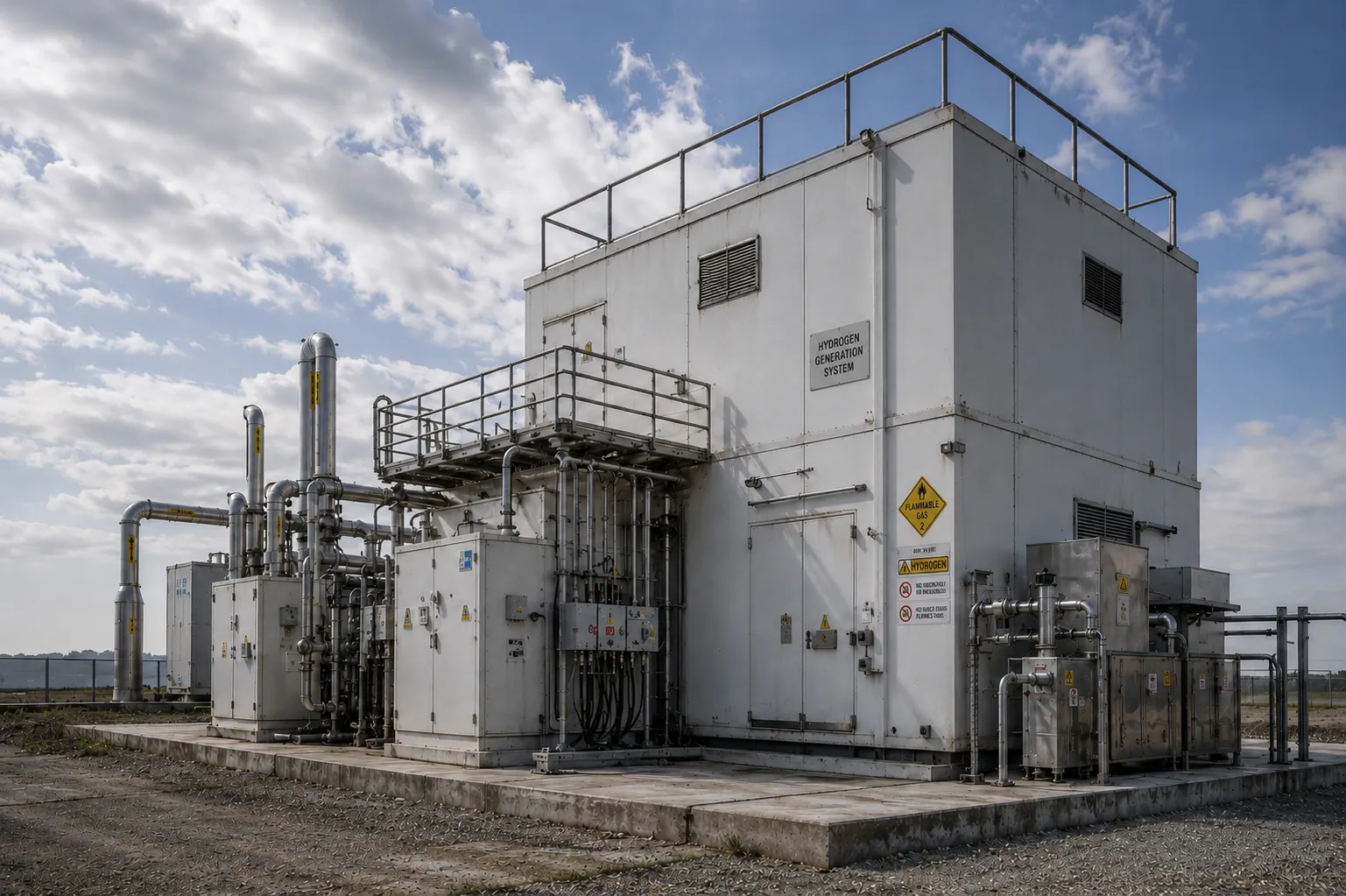
Visualisation of a hydrogen production plant: a tall white process building marked Hydrogen Generation System, with stainless steel pipework, access walkways and cabinets on a concrete pad

Modular technologies for clean hydrogen

Pressurised alkaline units that scale with demand. Order a single module or a full array, operational on site within twelve months.

50 kW – 20,000 kW
Power range
Within 12 months
Time to operational

Modular pressurised alkaline electrolysers, from 50 kW to 20,000 kW

Order a single module or a full array. Capacity is added in steps, so a site can start at the scale it needs and grow without redesigning the plant.

Single module

Order one unit

Multiple modules

Add capacity in steps

Full array

Order a full array

50 kWPower range20,000 kW
Three configurations shown left to right: a single module, multiple modules, and a full array. The published power range of 50 kW to 20,000 kW spans the sequence.
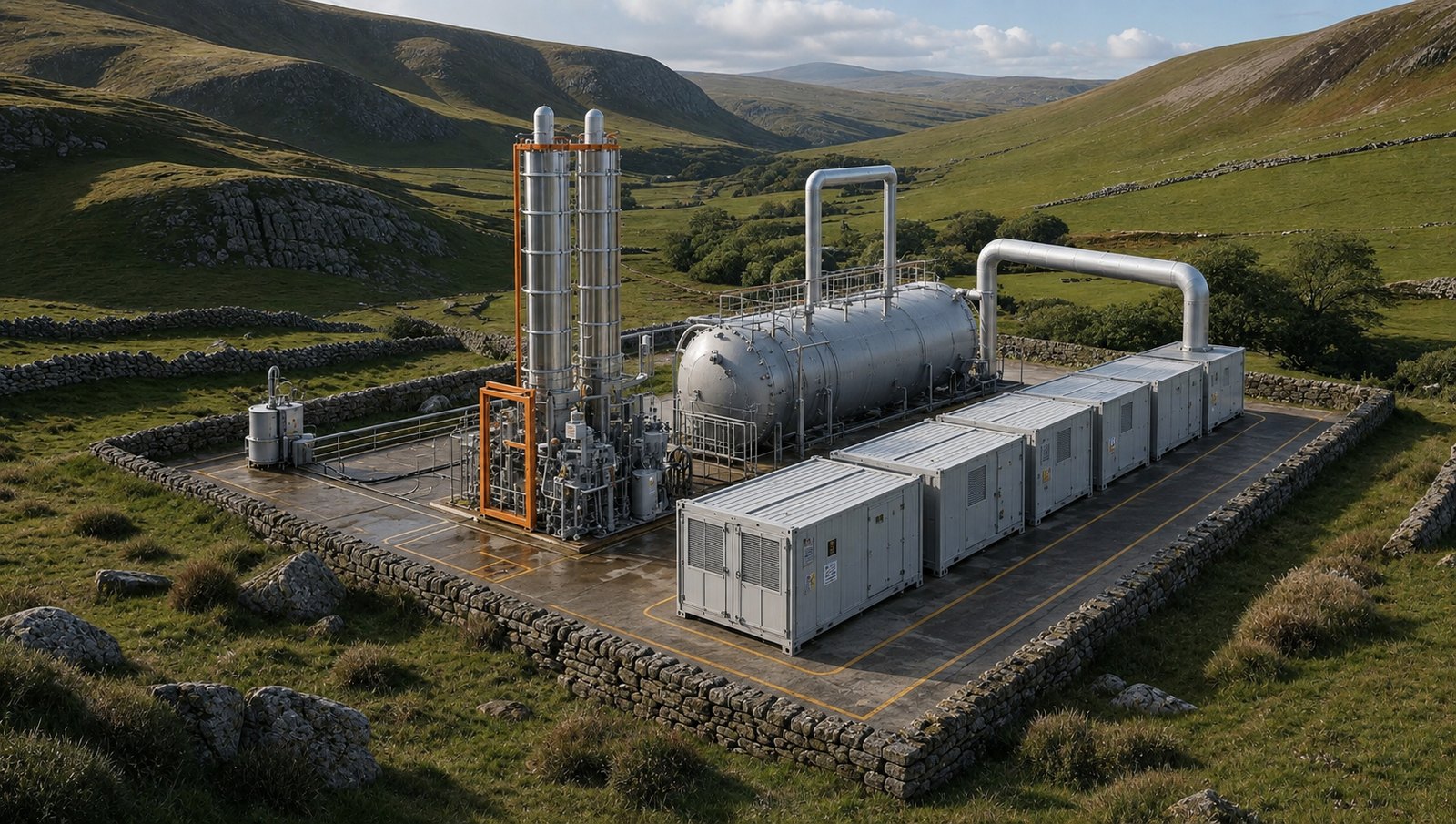
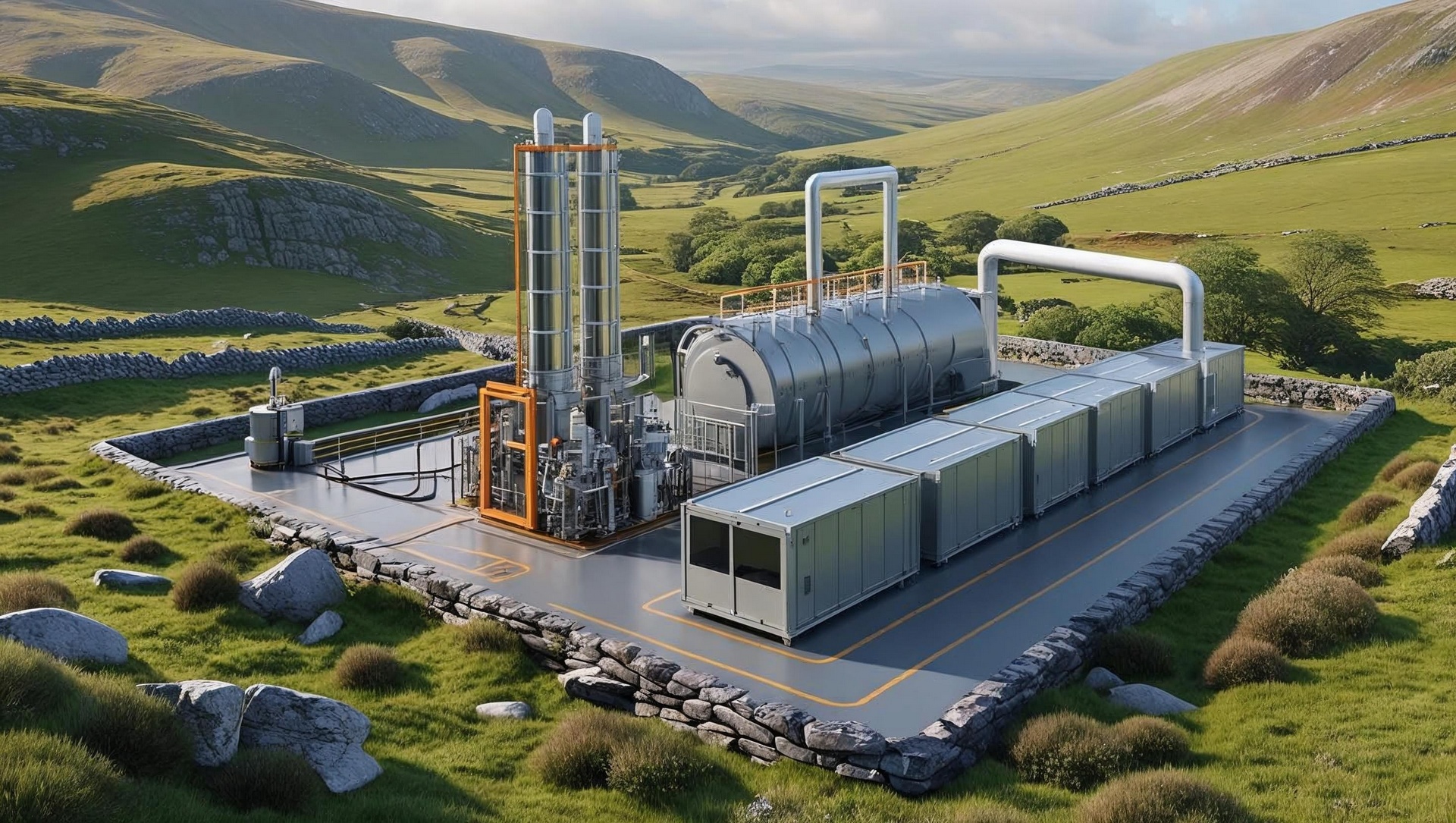
Visualisation of a compact gas plant in a hillside setting: two tall process columns, a horizontal pressure vessel and a row of containerised units on a concrete pad, enclosed by dry stone walls
Visualisation of a containerised installation. This site takes geothermal energy as its renewable input.

From renewable power to delivered hydrogen

Renewable inputs and water enter the pressurised alkaline stack. Hydrogen and oxygen leave it. Biogas reforming runs as a parallel pathway to the same output.

  1. 01

    Renewable inputs

    Solar, wind, hydro, geothermal and grid power feed the system, chosen for the lowest carbon and cost at each site.

  2. 02

    Pressurised alkaline electrolysis

    Modular PALK units split water into pure hydrogen and oxygen using clean electricity.

  3. 03Alternate pathway

    Biogas reforming

    A modular reformer turns organic waste into low carbon hydrogen, adding a second clean pathway alongside electrolysis.

  4. 04

    Green hydrogen

    Clean hydrogen is delivered for industry, mobility and power, ready to store, blend or use on demand.

Powered by the cleanest energy at each site

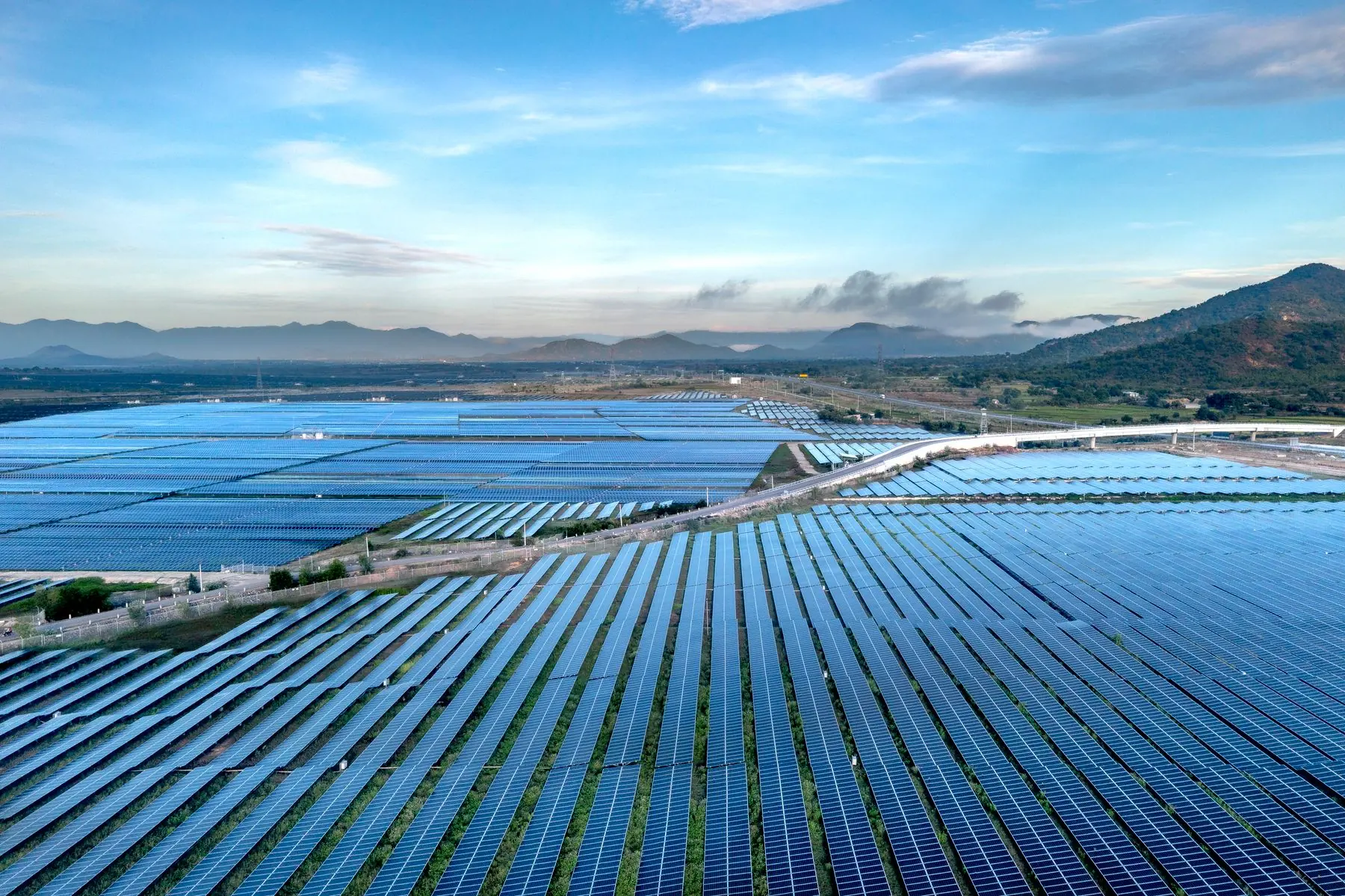
Aerial view of a vast solar panel farm stretching toward coastal mountains

Solar

Photovoltaic fields power electrolysis with clean daytime energy.

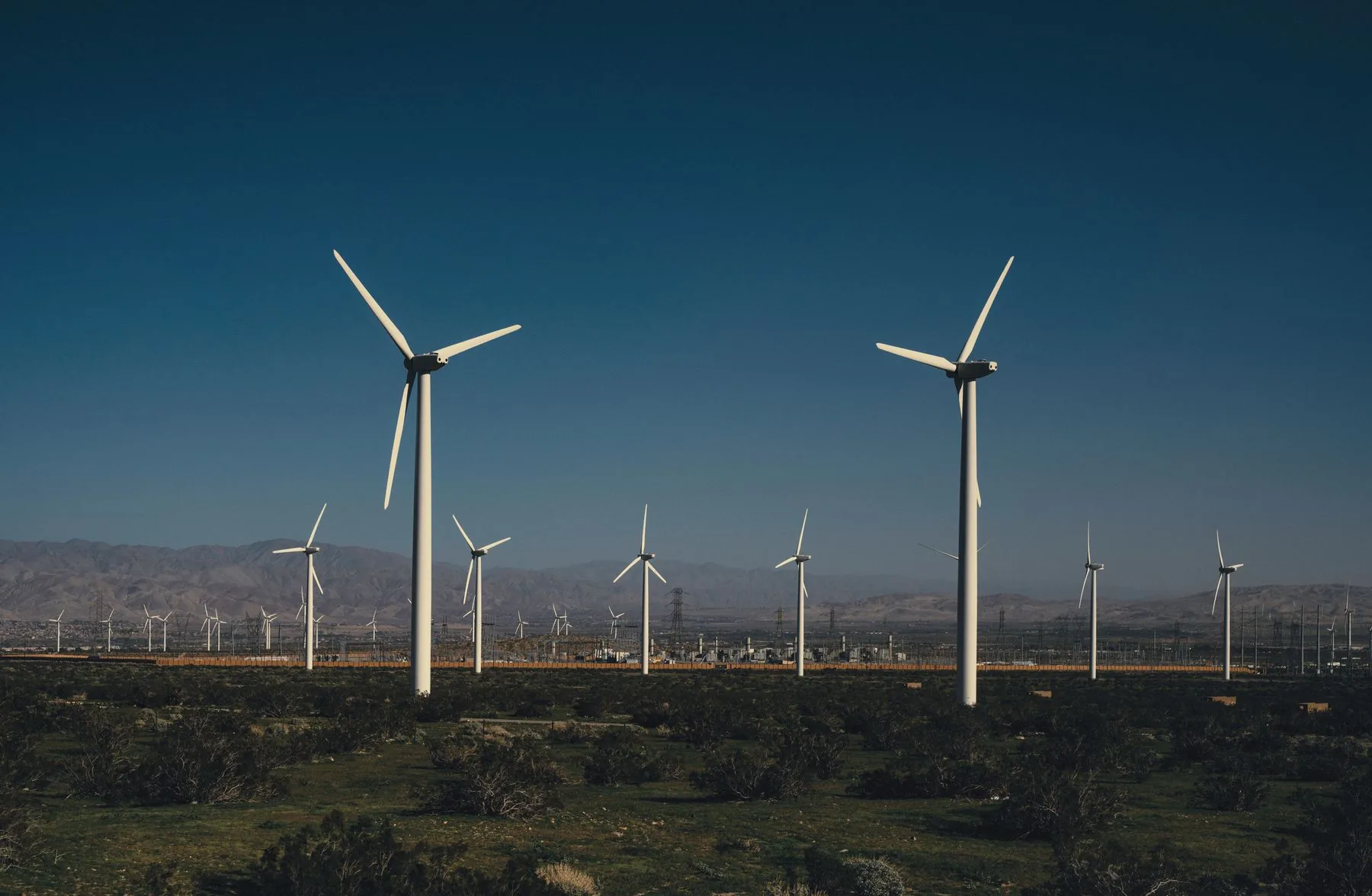
A field of onshore wind turbines under a clear blue sky

Wind

Onshore and offshore wind add resilient, low carbon capacity.

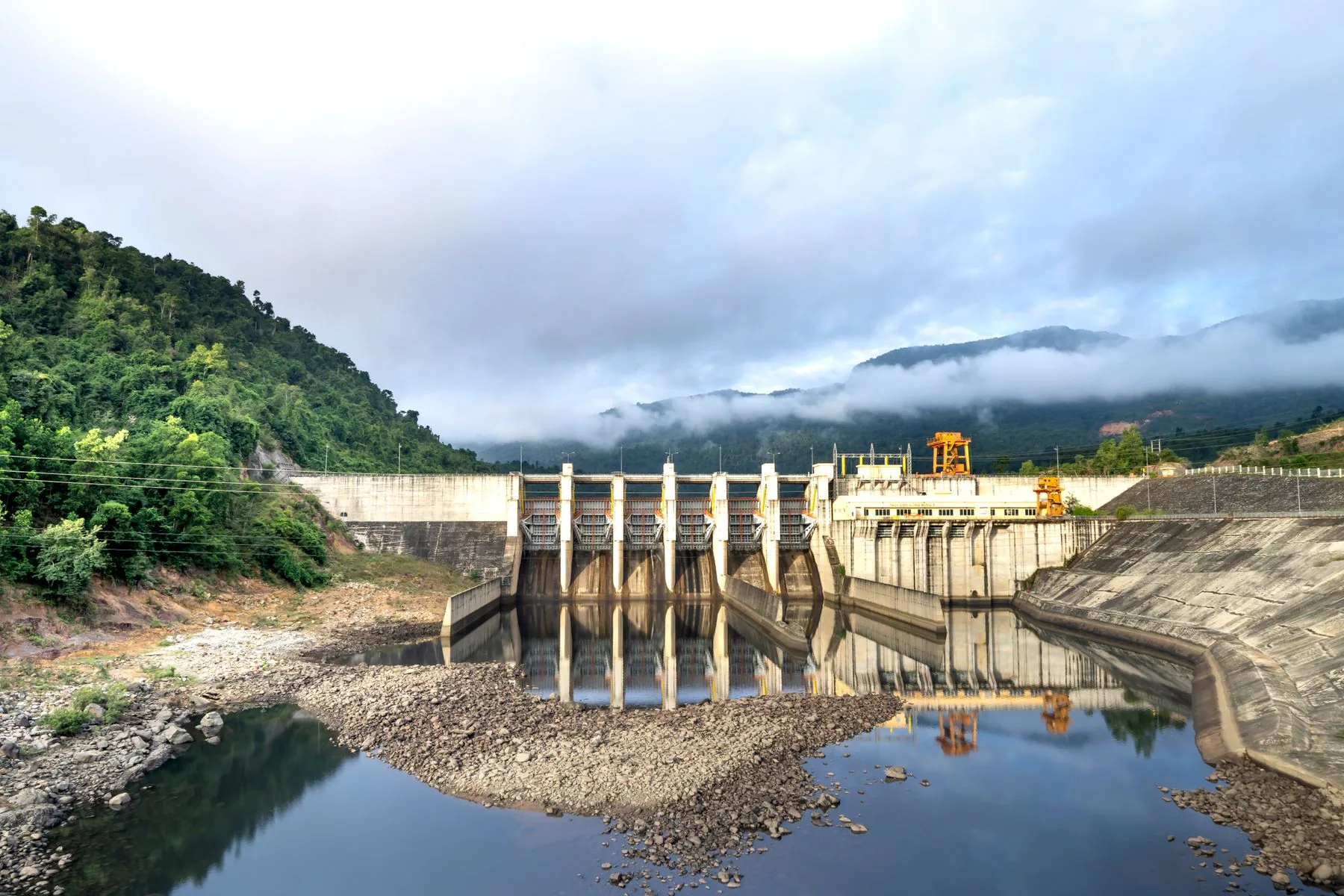
A hydroelectric dam on a river framed by green tropical mountains

Hydro

Hydro and grid balance the system for steady round the clock output.

Visualisation of a hydrogen plant at a geothermal site: process columns, a pressure vessel and containerised units on a concrete pad, set among green hills behind dry stone walls

Geothermal

Geothermal heat runs continuously, independent of weather or daylight.

System performance

Published figures for the electrolyser platform, grouped so they can be scanned against a specification.

Capacity and deployment
Power range50 kW – 20,000 kW
TechnologyPressurised Alkaline Electrolysis
Time to operationalWithin 12 months
InputsSolar · Wind · Hydro · Geothermal · Grid
Efficiency
Stack level performanceUp to 80% (HHV)
At operating points0.5 A/cm², 30 barg, 70–80°C
System efficiency (HHV)69.4%
System efficiency (LHV)58.7%
Specific energy consumptionCompetitive stack consumption metrics achieved through advanced electrode configurations
Purity
Hydrogen, standard delivery output>99.999% (>5.0 Grade)
Oxygen purity>99.7%
PurificationStandard onboard purification packages such as Temperature Swing Adsorption systems
Footprint and pressure
Operating pressure30 barg, delivered directly from the stack
ContainerisationRugged, pre-assembled 40-foot equivalent containerised footprints for rapid outdoor deployment with minimal civil works
Gateway 200 (1 MW / 200 Nm³/h)~155 m²
Gateway 400 (2 MW / 400 Nm³/h)~310 m²
Gateway 800 to 2000 SeriesScalable modular blocks extending up to 2,000 Nm³/h (10 MW) in multi-container layouts

Hydrogen at this purity is suited to chemical feedstocks, industrial hydrogenation, zero emission transport fuels and high specification PEM fuel cell integration, without catalyst poisoning risk.

Delivering at 30 barg from the stack removes most of the downstream compression that storage and pipeline injection would otherwise require. That cuts both capital cost and the energy penalty that comes with it.

Read the manufacturer’s note on hydrogen purity (opens in a new tab)

The Gateway series, built by Stargate Hydrogen

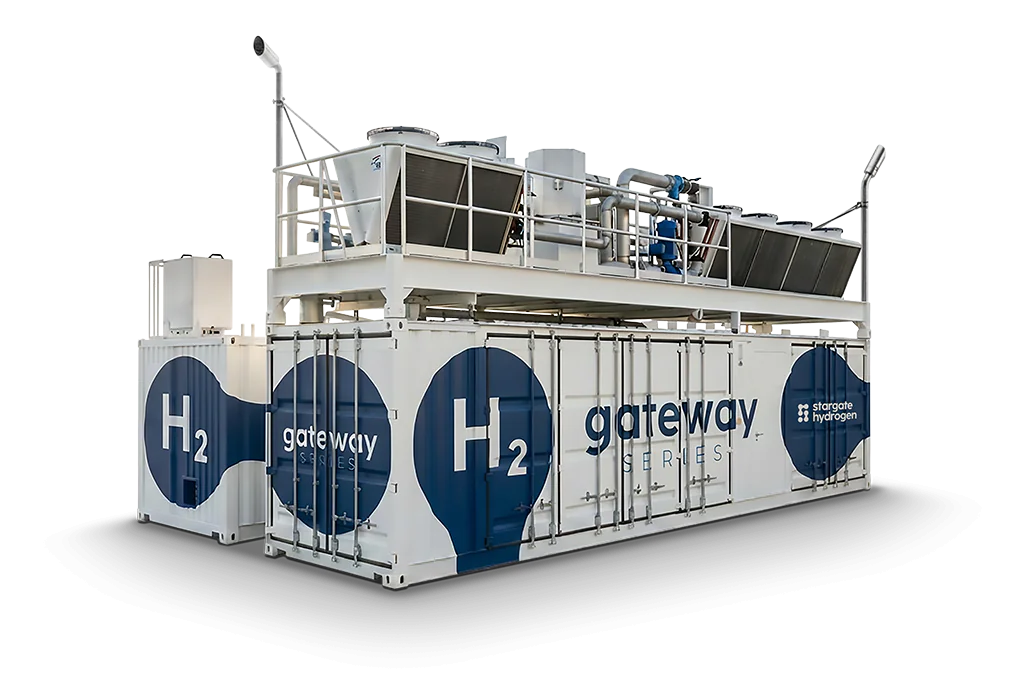
Aurion+ deploys, integrates and operates the Gateway line. It is a turnkey, containerised range built around pressurised alkaline stacks. Capacities are fixed, and a site scales by adding containers.

Stargate Hydrogen Gateway 200 containerised electrolyser unit, branded gateway series, with cooling equipment mounted on the roof deck
Gateway 200 containerised unit
Gateway series models, power, output and system footprint including maintenance zones
ModelPowerOutputFootprint
Gateway 2001 MW200 Nm³/h~155 m²
Gateway 4002 MW400 Nm³/h~310 m²
Gateway 800–2000 Seriesup to 10 MWup to 2,000 Nm³/hmulti-container layouts

Footprints are quoted including maintenance zones.

  • Scalable modular blocks: capacity is added by combining containerised units, so a site can start small and grow without redesigning the plant.

  • 40-foot equivalent containerised architecture, designed for rapid outdoor deployment with minimal civil works.

  • Hydrogen delivered directly from the stack at 30 barg, reducing downstream compression CAPEX and energy penalties before storage or transport.

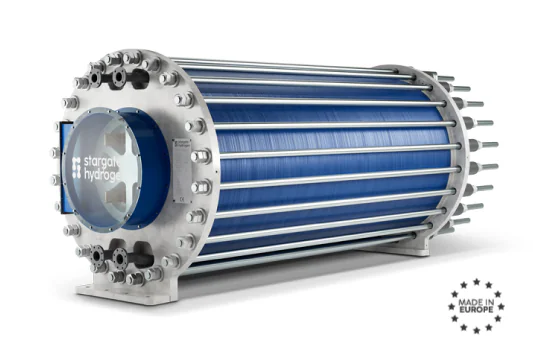
A Stargate Hydrogen electrolyser stack, a cylindrical assembly of blue cells between steel end plates, marked Made in Europe

The stack

Pressurised alkaline cells, built in Europe

The stack is where the split happens. Each Gateway unit is built around Stargate Hydrogen’s pressurised alkaline stacks, with the balance of plant containerised around them.

View the manufacturer’s specifications (opens in a new tab)

How the system works

Renewable power and tap water in, high quality hydrogen out

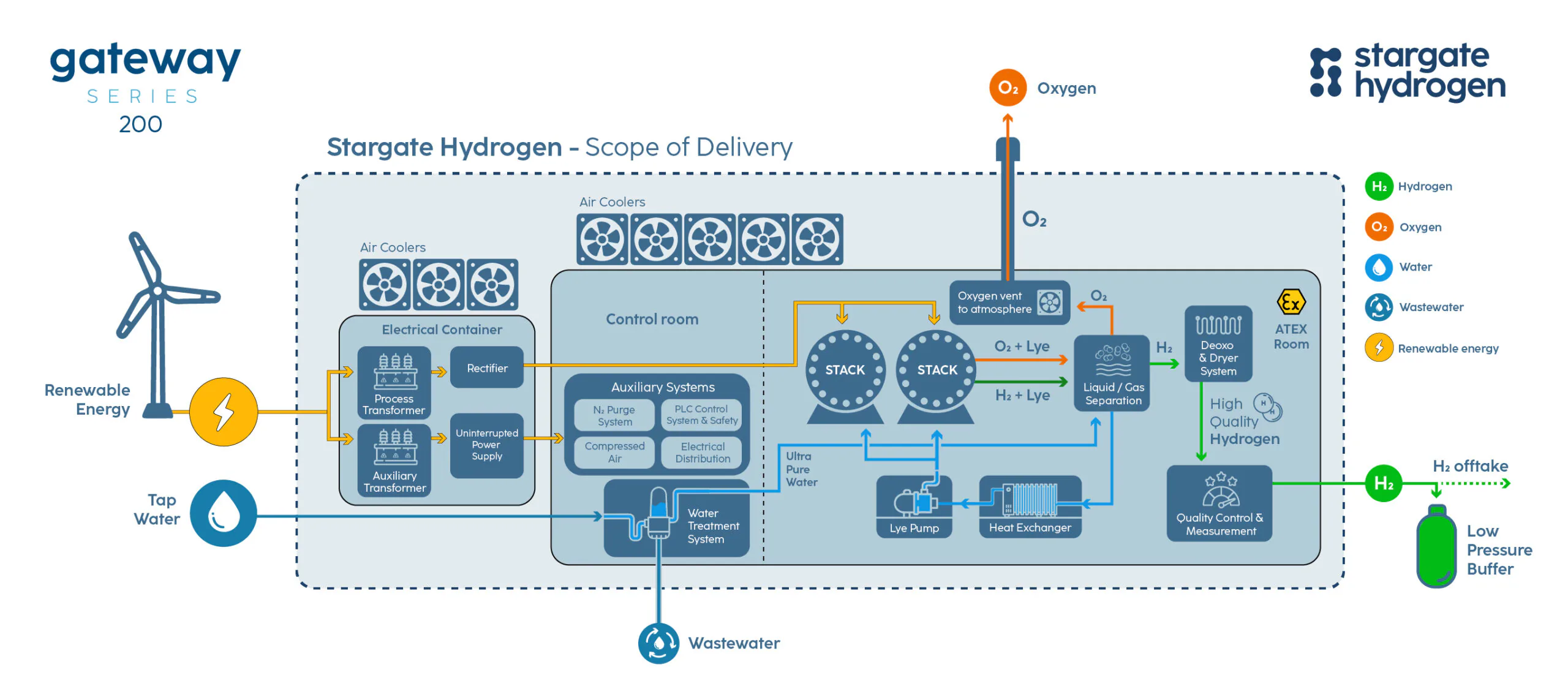
The diagram below is the manufacturer’s scope of delivery for the Gateway 200. Power is conditioned through the transformers and rectifier, tap water is treated to ultra pure water, and the stacks split it. Liquid and gas separation sends oxygen to atmosphere and hydrogen on through the deoxo and dryer system to quality control, leaving as high quality hydrogen to a low pressure buffer.

Stargate Hydrogen Gateway Series 200 system diagram. Renewable energy and tap water enter the scope of delivery. Power passes through process and auxiliary transformers, a rectifier and an uninterrupted power supply. Tap water passes through a water treatment system to become ultra pure water, with wastewater leaving the system. The ultra pure water and lye circulate through two stacks via a lye pump and heat exchanger. Oxygen and lye, and hydrogen and lye, pass to liquid and gas separation. Oxygen is vented to atmosphere. Hydrogen passes through a deoxo and dryer system in an ATEX room, then quality control and measurement, leaving as high quality hydrogen to a low pressure buffer for offtake.
Gateway Series 200 scope of deliveryOpen the diagram full size (opens in a new tab)

In a project

The 10 MW pressurised alkaline electrolysis plant at Project Cendana in Peninsular Malaysia is an application of this technology.

See Project Cendana

Product photography and the system diagram are courtesy of Stargate Hydrogen, and show the manufacturer’s equipment rather than an Aurion+ installation.

Tested and certified by third parties

Stargate Hydrogen’s Gateway technology has been assessed by independent third parties. Deploying equipment that has already been tested and certified removes a category of risk from a project.

CE-Mark

CE-Mark certified across the standard Gateway turnkey product line, for deployment under European and international compliance frameworks.

The conformity mark that allows equipment to be placed on the European market.

Assessed: Stargate Hydrogen technology
Fraunhofer Institute

Stargate's electrode technology verified through independent laboratory testing.

A German applied research organisation whose laboratories carry out independent testing for industry.

Assessed: Stargate Hydrogen technology

ZSW

Gateway stacks completed industrial performance testing at the ElyLab facility in Stuttgart.

The Centre for Solar Energy and Hydrogen Research Baden-Württemberg, a German research institute for solar and hydrogen technology.

Assessed: Stargate Hydrogen technology
Where green hydrogen is used

Demand is not concentrated in one speculative market. Hydrogen serves as a chemical feedstock, a high temperature fuel, a transport fuel and a way to store renewable energy over time.

For the wider market picture, see the International Energy Agency’s Global Hydrogen Review (opens in a new tab) and The Future of Hydrogen (opens in a new tab).

Heavy industry and chemicals

Sectors that need hydrogen as a chemical feedstock or a high temperature fuel, where electricity alone cannot do the job.

  • Steel production
  • Ammonia and fertiliser
  • Refining and chemical feedstock
  • Glass and metals
  • Industrial process heat

Transport and mobility

Vehicles that run too far, too heavy or too continuously for batteries to be a straightforward answer.

  • Buses and public transport
  • Rail
  • Heavy goods and long haul freight
  • Maritime and port equipmentEmerging
  • AviationEmerging

Power and energy systems

Hydrogen as a way to move renewable energy across time rather than only across distance.

  • Long duration storage
  • Grid balancing and seasonal storage
  • Backup and off grid power
  • Gas network blending

Emerging and specialist

Smaller volumes, higher purity requirements, and uses that are growing quickly from a low base.

  • Data centre backup powerEmerging
  • Semiconductor and electronics
  • Food industry hydrogenation

Heavy industry and chemicals

Steel production
Hydrogen replaces coking coal as the reducing agent in direct reduced iron processes, so the reaction gives off water rather than carbon dioxide.
Ammonia and fertiliser
Ammonia is made from hydrogen and nitrogen, and most of it goes into fertiliser. Green hydrogen changes the carbon footprint of that feedstock without changing the process.
Refining and chemical feedstock
Refineries already consume hydrogen at scale for hydrotreating and hydrocracking, and the chemical industry uses it as a building block.
Glass and metals
Processes that must run under a reducing atmosphere use hydrogen to keep the surface of the material from oxidising.
Industrial process heat
Hydrogen burns hot enough for high temperature industrial heat, which is difficult to reach with electricity alone.

Transport and mobility

Buses and public transport
Fleets return to a single depot each day, which suits one refuelling point serving many vehicles.
Rail
Hydrogen trains run on routes where overhead electrification has not been installed, replacing diesel without the cost of wiring the line.
Heavy goods and long haul freight
Payload and range matter more than in light vehicles, and refuelling time counts against vehicle utilisation.
Maritime and port equipmentEmerging
Shipping is being explored through hydrogen and hydrogen derived fuels such as ammonia and methanol. Port handling equipment is closer to deployment than deep sea vessels.
AviationEmerging
Hydrogen aviation is at demonstration and development stage rather than in commercial service, and depends on both new airframes and airport fuelling infrastructure.

Power and energy systems

Long duration storage
Surplus renewable generation can be converted to hydrogen and stored, holding energy over periods that batteries are not built to cover.
Grid balancing and seasonal storage
Stored hydrogen can be converted back to power when generation falls short, including across seasons rather than hours.
Backup and off grid power
Sites without a reliable grid connection can hold hydrogen on site as a fuel reserve.
Gas network blending
Hydrogen can be blended into existing gas networks, using infrastructure that is already in the ground.

Emerging and specialist

Data centre backup powerEmerging
Fuel cells are being trialled as an alternative to diesel generators for standby power.
Semiconductor and electronics
Manufacturing needs ultra high purity hydrogen, where trace contamination affects the process.
Food industry hydrogenation
Hydrogen is used to hydrogenate edible oils and fats.
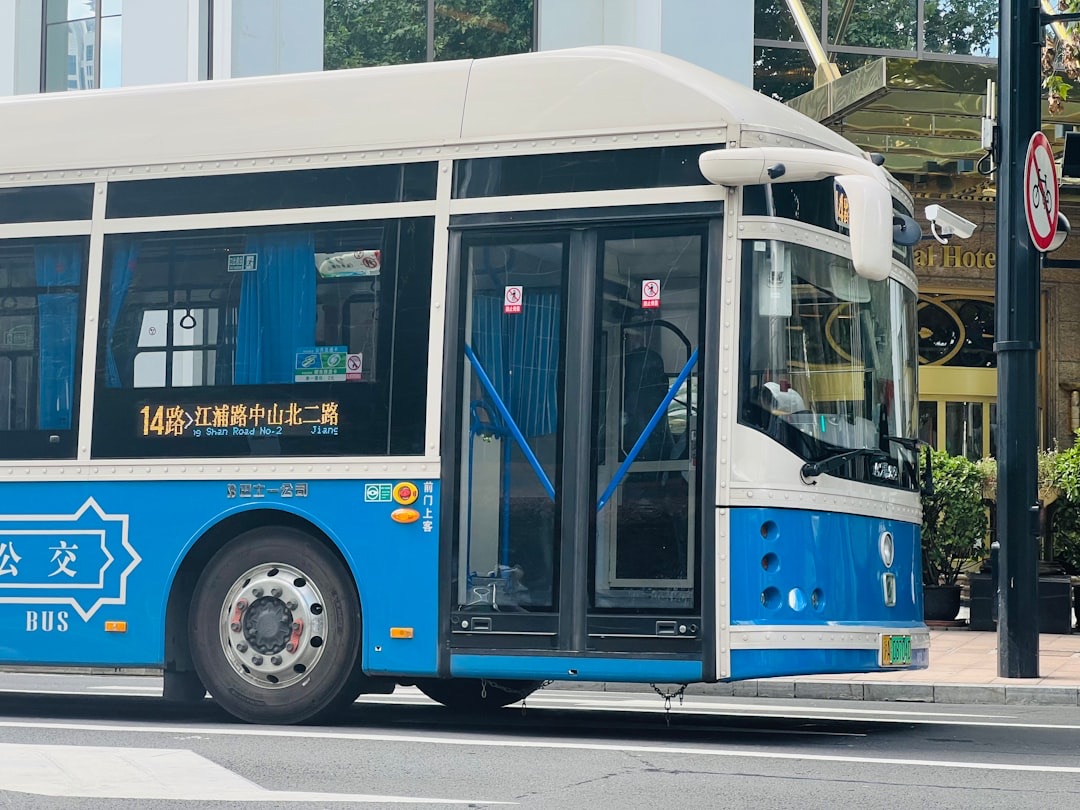
A blue and white city bus at a kerbside stop

Hydrogen bus

Depot based fleets refuel at a single point, which is why buses are among the earliest road applications.

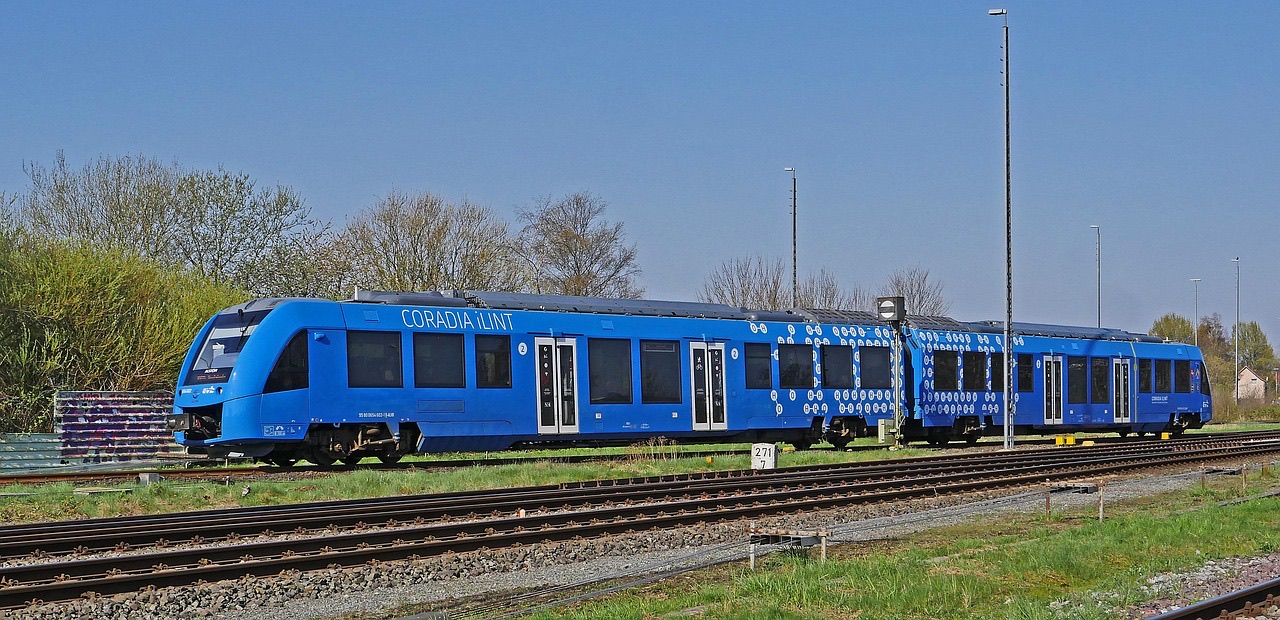
A blue Coradia iLint passenger train standing in a rail siding

Hydrogen train

Hydrogen rail replaces diesel on routes that have not been electrified, without the cost of wiring the line. Alstom Coradia iLint (opens in a new tab)

Published purity

>99.999% (>5.0 Grade)

The published output purity is stated as suitable for chemical feedstocks, industrial hydrogenation and zero emission transport fuels. It is also stated as suitable for high specification PEM fuel cells, without catalyst poisoning risk. That grade is what semiconductor, electronics and fuel cell applications require.

The technology, explained simply

Two short explanations for anyone meeting this technology for the first time. No engineering background needed.

What is green hydrogen?

Water is made of hydrogen and oxygen. Pass an electric current through it and the two separate. That process is called electrolysis, and the hydrogen it releases can be burned or converted back into energy as a fuel.

Hydrogen counts as green when the electricity doing the splitting comes only from renewable sources: wind, solar, hydro or geothermal. Made that way, it is virtually free of carbon from start to finish. Most hydrogen made today comes from fossil fuels instead, which releases significant greenhouse gases.

It matters because some industries cannot simply switch to electricity. Heavy manufacturing, chemicals and long distance shipping need a fuel they can store and move. Green hydrogen gives them one, and it doubles as a way to store renewable energy and carry it across the world.

How pressurised alkaline electrolysis works

Inside each unit is a sealed cell holding a liquid that conducts electricity, called an electrolyte. Ours is potassium hydroxide. A thin barrier called a diaphragm divides the cell down the middle.

Applying an electric current splits the water. Pure hydrogen gathers on one side of the diaphragm and oxygen on the other, so the two gases are kept apart and both come out clean.

The cell runs under pressure, and that does three useful things. It stops gas bubbles forming, it keeps the equipment compact, and it delivers hydrogen that is already pressurised. Hydrogen normally has to be squeezed into a smaller volume before it can be stored or piped anywhere, which costs energy. Running the cell under pressure largely removes that step.

Cross section of a pressurised alkaline electrolysis cellA sealed cell holds a potassium hydroxide electrolyte. A diaphragm divides the cell down the middle. Electric current enters from below. Hydrogen collects on the left of the diaphragm and oxygen on the right, and both leave the cell under pressure.H₂O₂Hydrogen outOxygen outDiaphragmPotassium hydroxide electrolyte
The cell runs under pressure, which stops gas bubbles forming, keeps the equipment compact and delivers hydrogen that is already pressurised.
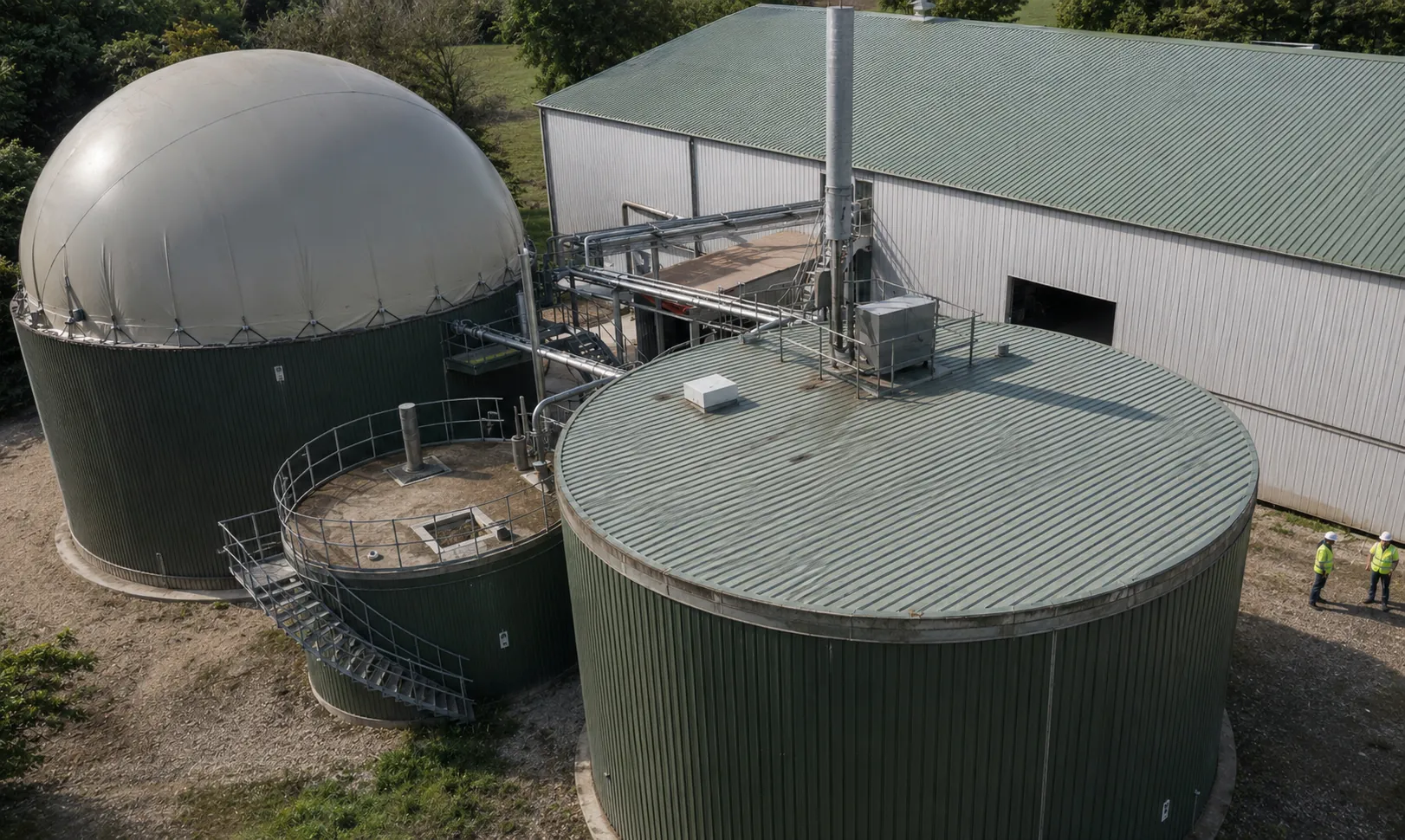
Visualisation of an anaerobic digestion plant seen from above: a domed gas holder over one digester, a second covered tank, a flare stack and an adjoining process building
Anaerobic digestion and reforming, the alternate pathway to the same hydrogen.

A second pathway, alongside electrolysis

Modular reforming turns biomethane from organic waste into high purity hydrogen. It runs around the clock, so it complements electrolysis rather than competing with it.

Explore alternative fuels