
Project Cendana — Zero Waste Sustainable Aviation Fuel
Palm waste in, aviation fuel out
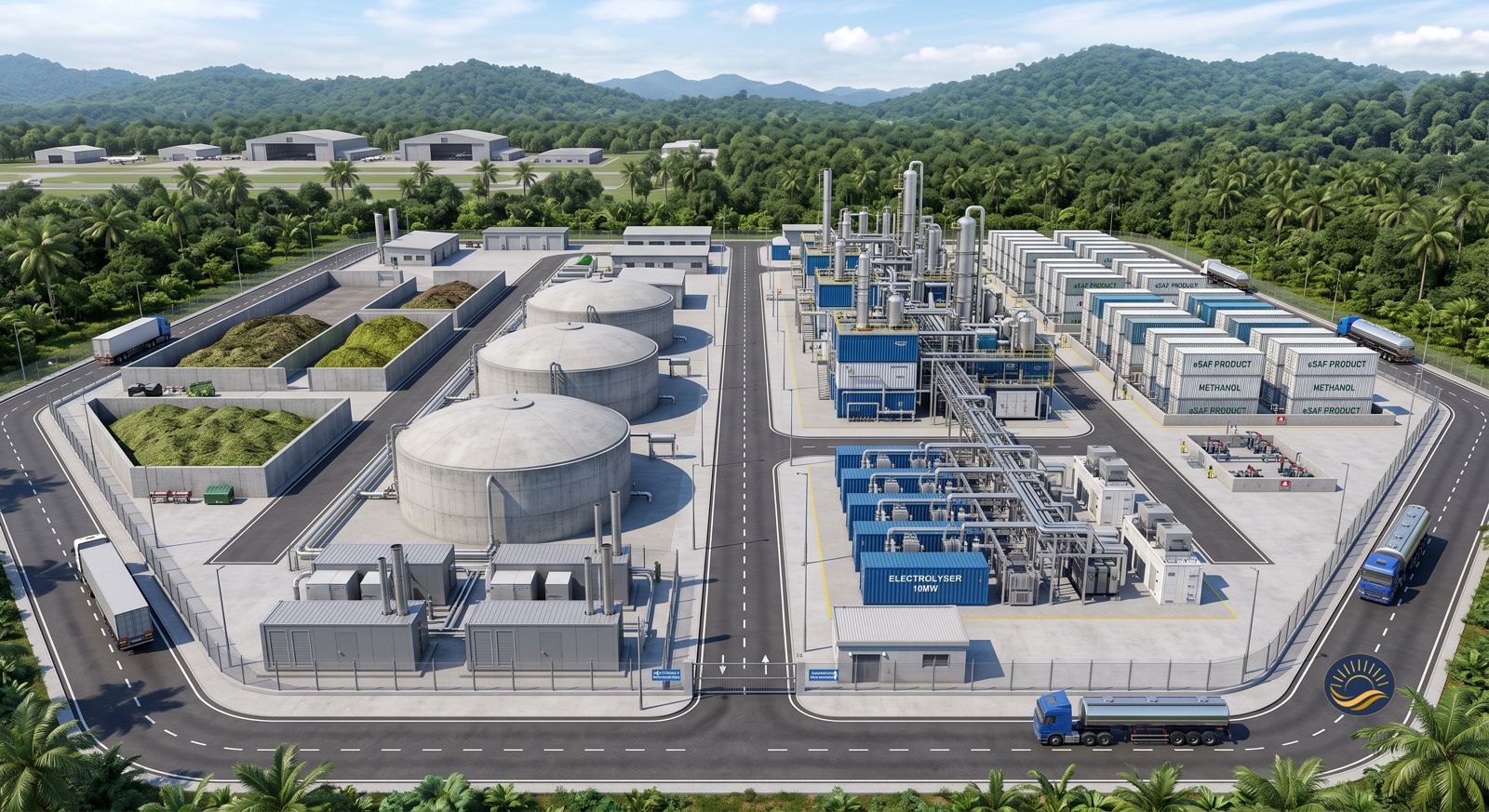
An integrated Power-to-Liquid (PtL) facility that turns regional palm waste into synthetic aviation fuel (eSAF) and premium merchant carbon dioxide. It pairs local biomass with synthesis technology to make an energy hub that is commercially resilient and independent of the grid.
- Power island
- 10 MW
- Behind the meter, 24/7
- Electrolysis
- 10 MW
- Pressurised alkaline
- CO₂ per year
- 93,000 t
- Projected at design utilisation
The figures on this page are design basis projections at design utilisation, not measured operating results.
A closed-loop ecosystem
Four stages, each feeding the next. Nothing leaves the site as waste.
- 01
Baseload generation
Local palm waste fuels a Dry Anaerobic Digestion system. That drives a 10 MW power island behind the meter, running 24/7 without reliance on external grids.
- 02
Synthesis
A 10 MW pressurised alkaline electrolysis plant feeds high purity green hydrogen into a modular PtL synthesis unit. There it is matched stoichiometrically with captured biogenic CO₂ to yield drop-in eSAF and renewable naphtha.
- 03
Carbon commercialisation
Rather than venting surplus biogenic CO₂, the facility captures and cryogenically liquefies over 93,000 tonnes annually for the domestic food and beverage market.
- 04
Zero-waste philosophy
From pelletising AD digestate for local bio-fertiliser to recycling reaction water and tail gases, every by-product is recaptured, repurposed or monetised.
Redefining eSAF economics
Carbon capture is treated as a merchant liquid CO₂ revenue stream carrying a high margin, not as a sunk environmental cost. That takes risk out of the PtL process. The second revenue stream offsets the plant's operating costs, so it can deliver 100% synthetic, zero contaminant aviation fuel at competitive prices.
Built from the systems we deploy
Hydrogen Production
The 10 MW pressurised alkaline electrolysis plant at Cendana is an application of this technology.
ExploreAlternative Fuels
The Dry Anaerobic Digestion system at Cendana is an application of the biogas pathway.
ExploreTalk to us about Project Cendana
For project, offtake or investment enquiries, our team will respond directly.
Contact our team